Thinking about buying a student rental near the University of Alabama? You might be weighing a place for your student, an income property, or both. The Tuscaloosa market can reward you if you understand how UA enrollment, location, and lease timing work together. In this guide, you’ll learn where to focus your search, what rents look like, how to plan for vacancy, and a simple cash-flow framework you can use right away. Let’s dive in.
Start with the right ZIPs
If you begin your search in 35487, you’ll hit a wall. That ZIP is a campus postal code, not a traditional residential market. For active listings and off-campus comps, focus on nearby Tuscaloosa ZIPs such as 35401, 35405, and 35406, plus the walkable neighborhoods by campus. You can confirm 35487’s campus-only status on the postal reference for that code at zip-codes.com.
Demand drivers near UA
UA set a record with 42,360 students for Fall 2025, which creates a steady off-campus housing baseline. Always check the university’s official numbers to track trends, since enrollment shifts can influence absorption and rent growth. You can find current counts on UA’s Quick Facts page.
Rents vary by bedroom count and distance to campus. A current snapshot shows average apartment rent in Tuscaloosa around $976 per month, according to the city page on Apartments.com. For bedroom-level comps when you underwrite per-bed leases, use county breakouts and recent samples on Rentometer to match your property type and location.
Property types to consider
- Purpose-built student housing. Larger off-campus communities that often lease by the bedroom, include amenities, and sometimes run private shuttles. UA’s portal helps you see buildings that advertise Crimson Ride or private service. Browse the university’s off-campus housing listings for context.
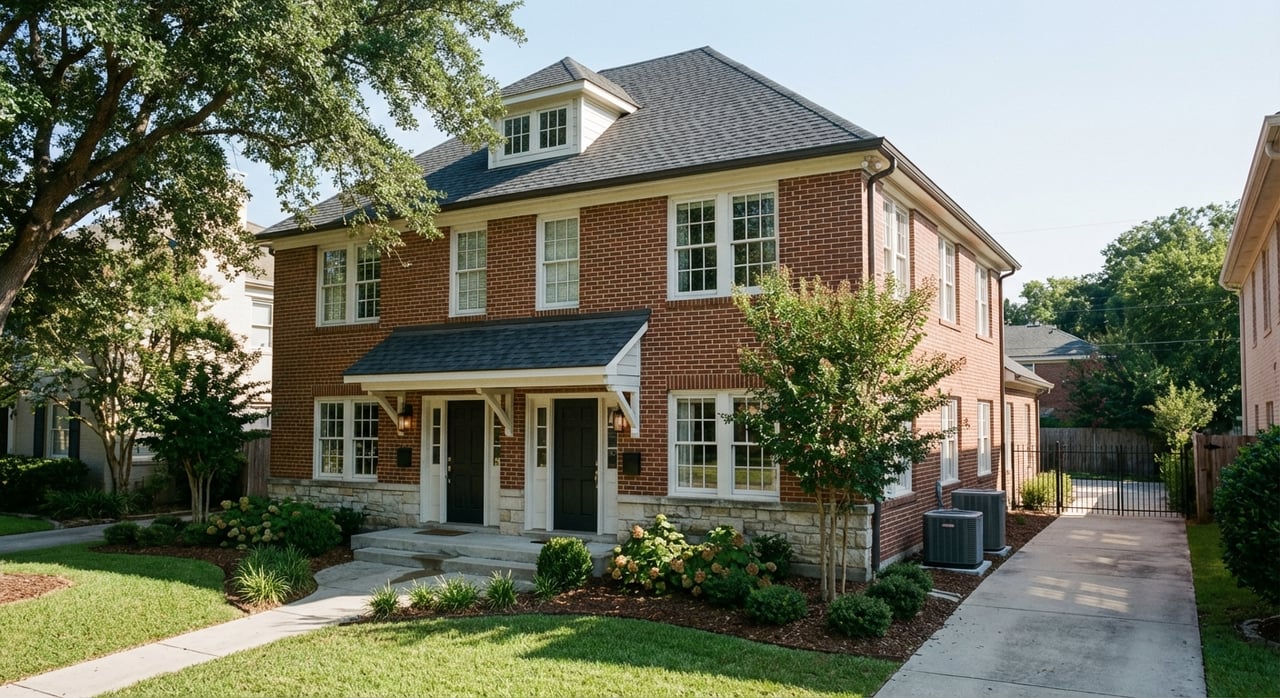
- Single-family homes used as shared student houses. Often 4 to 6 bedrooms in walkable areas near campus. These can command per-bedroom pricing if floor plans and parking support it.
- Small multifamily and townhomes. Duplex, triplex, quadplex, and townhouse clusters give you multi-unit economics without large-complex operations.
- Condos and townhouse communities. Some allow student leasing. Check HOA rules before you offer.
Location premiums that matter
Student renters value a fast, simple trip to class. Walkability, proximity to main lecture halls and student hubs, and shuttle routes create pricing tiers. Listings that clearly advertise a short walk or a reliable shuttle connection tend to lease faster and can support stronger per-bedroom pricing.
Lease cycles and vacancy planning
Most student-focused leases align to the academic calendar. Many properties start 12-month leases on or around August 1 with mid-August move-ins. UA’s guidance on renting off campus outlines the usual rhythms and expectations for tenants and landlords. Review their off-campus housing information to plan turnover and marketing.
Vacancy is seasonal in student markets. Even if you run full during fall and spring, expect softer summer demand. When you model cash flow, budget a conservative annual vacancy allowance in the 8 to 20 percent range for student-oriented homes, with separate reserves for turnover. Local reporting has noted the impact of bedroom mix on vacancy, so align your rent assumptions to what is actually leasing today. For a policy and supply backdrop, see this overview of student housing dynamics and city actions in The Crimson White’s coverage of Tuscaloosa’s housing debate.
Lease types and screening
Two structures are common:
- Individual bedroom leases. Each tenant signs for a single bedroom, often in larger communities. This reduces exposure if one roommate leaves, since the other beds remain on separate agreements.
- Joint-and-several unit leases. Typical for houses and small multifamily. All tenants are responsible together, which can increase management touchpoints.
Locally, landlords often require guarantors or cosigners for students. UA’s guidance describes both lease types and general expectations, so align your plan with their off-campus overview.
Build your first cash-flow plan
Use this simple workflow to size up a candidate property near UA. Replace each placeholder with current local numbers.
- Gather your inputs
- Purchase price and nearby comps: Pull recent sales and actives within 0.25 to 1 mile in the correct street ZIP. A local MLS search will give you the best read for the block.
- Rents by bedroom: Use Apartments.com for city context and Rentometer for bedroom-level comps near your address.
- Property tax: Look up the parcel on the Tuscaloosa County tax or assessor portal. A public directory with contacts and search links is available via this county records index.
- Insurance: Get estimates from a local broker, then confirm with a quote. For a quick Tuscaloosa average range, see an Alabama market overview on Clovered.
- Management fees: Typical local property management runs about 7 to 12 percent of collected rent, plus leasing and service fees. See a quick primer on fees here: property manager cost guide.
- Run the math
- Gross Potential Rent (GPR) = monthly market rent per bed or per unit times 12.
- Vacancy and credit loss = GPR times your vacancy assumption. In student submarkets, start with 8 to 20 percent.
- Effective Gross Income (EGI) = GPR minus vacancy plus any parking, laundry, or other income.
- Operating expenses = taxes, insurance, utilities you pay, routine maintenance, management fee, HOA if any, and capital reserves.
- Net Operating Income (NOI) = EGI minus operating expenses.
- If you finance, subtract annual debt service from NOI to see cash flow and calculate cash-on-cash. Cap rate equals NOI divided by purchase price.
- Quick example to illustrate
- Product: 4-bed SFR leased by the bedroom at $650 per bed.
- GPR: $650 x 4 x 12 = $31,200 per year.
- Vacancy: 12 percent = $3,744, so EGI about $27,456.
- Expenses: example range could include taxes, insurance, management around 7 to 12 percent, and maintenance or reserves. If total operating expenses were roughly $12,000, then NOI would be about $15,456.
These figures are illustrative only. Always replace each line with live comps, parcel tax numbers, and current insurance and management quotes.
Watch supply and zoning
Tuscaloosa has added many purpose-built student bedrooms in the last decade. The city has also taken steps to slow certain large projects and limit some multi-bedroom unit types. These policies influence where new supply may appear and can affect future vacancy. Before you finalize an offer, check the latest city council and planning updates and verify zoning or overlay districts for your target address. For context on the recent policy landscape, review The Crimson White’s summary of local housing actions.
Due-diligence checklist
- Verify the ZIP. 35487 is campus mail. Use adjacent ZIPs for street-level comps. See the postal reference.
- Pull comps within 0.25 to 1 mile. Focus on the correct street ZIP and similar distance to campus and shuttle routes.
- Gather rent comps by bedroom. Use Rentometer and Apartments.com to cross-check pricing.
- Confirm parcel taxes. Use the Tuscaloosa County assessor via this public directory and keep contact details for follow-up.
- Get 2 to 3 insurance quotes. Start with a local broker and compare against a Tuscaloosa average reference like Clovered.
- Confirm zoning and overlays. Check current city rules and any university-area restrictions before closing.
- Decide your lease type. Individual bedroom vs joint lease affects risk, collections, and management touch.
- If hiring a manager, request a written fee schedule. Expect a monthly fee in the 7 to 12 percent range plus leasing and service fees. See this cost overview.
Work with a local partner
A successful UA-area investment comes down to the right ZIP, the right floor plan, and realistic underwriting that matches the academic year. When you pair that with local comps, clean presentation, and clear lease terms, you set yourself up for stable occupancy and smoother turnover. If you want neighborhood-level guidance on campus-adjacent streets, rents by bedroom, or a tailored underwriting worksheet, reach out to Traci Taft to review options and timing.
FAQs
Is 35487 a real neighborhood for buying a rental near UA?
- 35487 is the university’s campus postal ZIP, not a typical street-address market. Use nearby ZIPs like 35401, 35405, and 35406 for listings and comps.
How much rent can I expect for a UA student rental?
- Citywide averages are about $976 per month for apartments, with per-bedroom pricing varying by distance and product type. Cross-check with bedroom-level comps on trusted rent sources.
When do most UA leases start and end?
- Many student-oriented properties run 12-month leases that start around August 1 with mid-August move-ins, aligning with the academic calendar and summer turnover.
How should I budget for vacancy in a student market?
- Plan for seasonal vacancy and turnover, often 8 to 20 percent annually for student-focused homes, depending on lease structure and summer strategy.
Is an individual bedroom lease better than a joint lease for students?
- Individual bedroom leases can reduce exposure if one roommate leaves, while joint leases simplify one contract for the whole home. Choose based on property type, management style, and local rules.
Where can I find property tax and insurance estimates for underwriting?
- Use the Tuscaloosa County assessor’s parcel records for taxes and get multiple quotes from local insurers. An Alabama market overview can help you set a starting insurance estimate.